Archived snapshot. This page was frozen on June 21, 2026 and may be outdated. Use the Daily Logs for updated field records.

Southern Cook Islands | coral field guide

Reef Life

A fast coral field reference for matching growth form, habitat, abundance, and comparison notes while reviewing reef stops. Metadata were collected from Corals of the World and photos remain hosted and attributed to the source website.

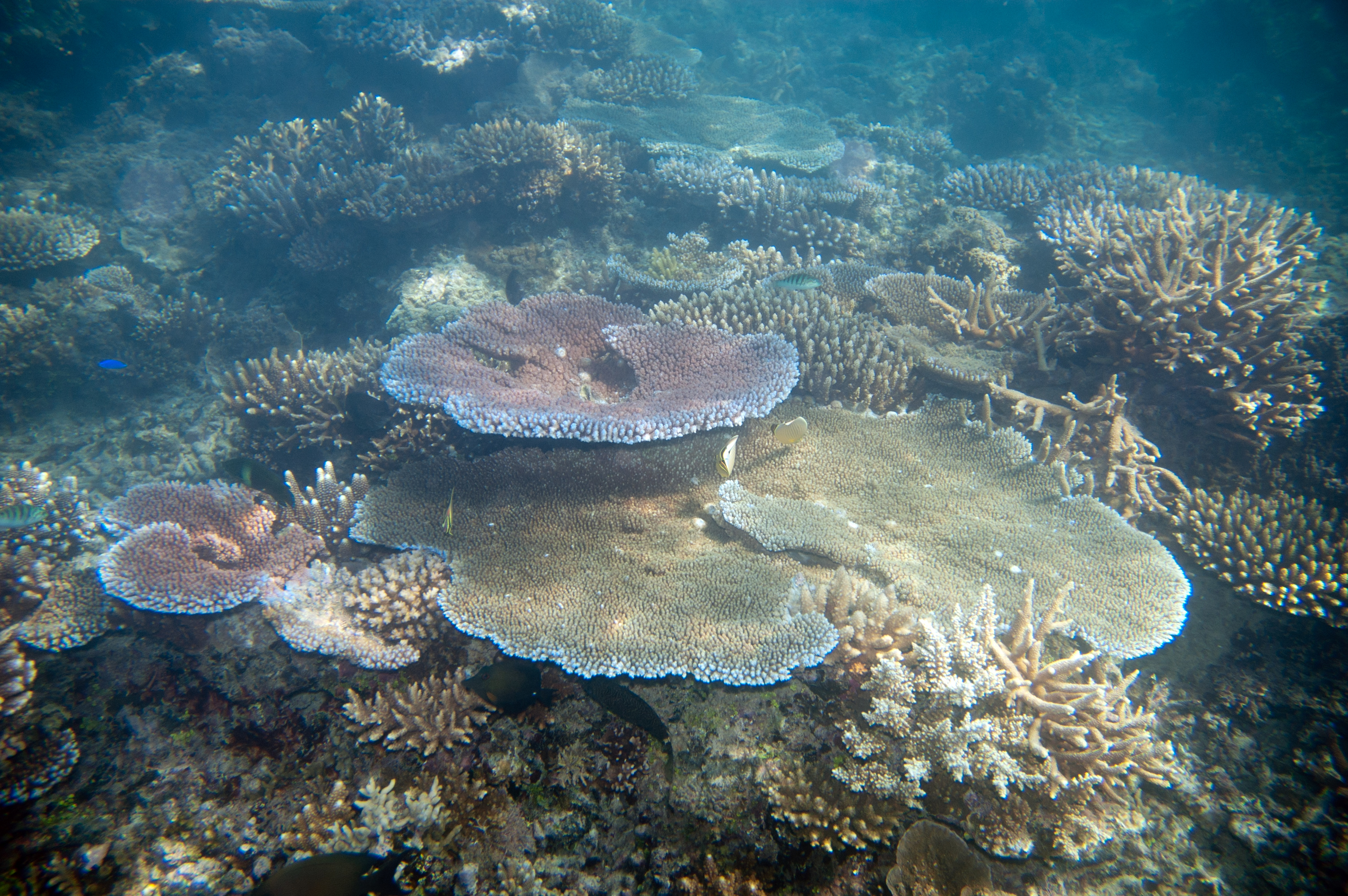
Branching and plating corals on a shallow Indo-Pacific reef slope.

Coral catalog

Quick filters
Growth habit
Common field genera

Habitat filters
Habitat

Filtered results

181 species

All genera, all habitats, all abundance classes.

Field ID Extras

Reef Builders

Photo cards for the corals and algae that shape the shallow platform.

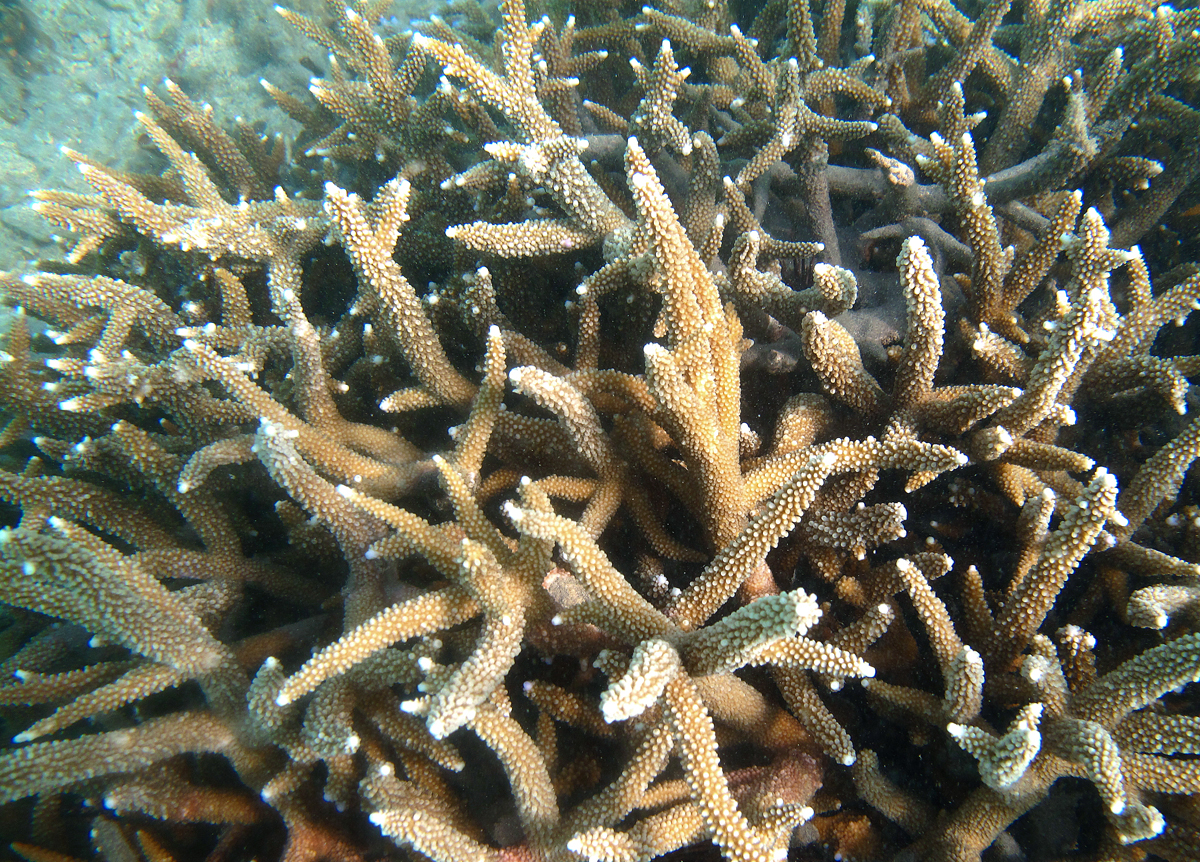
Fast-growing framework coral

Branching acropora corals

Acropora spp.

Look for Delicate antler-like or table-like branches, often pale tan, blue-tipped, or cream in clear shallow water.

Usually Upper fore reef, leeward coral gardens, and wave-flushed hardground where breakage fragments can reattach.

Main photo: Paul Asman and Jill Lenoble via Wikimedia Commons · CC BY 2.0
Extra photos: Philippe Bourjon via Wikimedia Commons · CC BY-SA 3.0
Long-lived framework coral

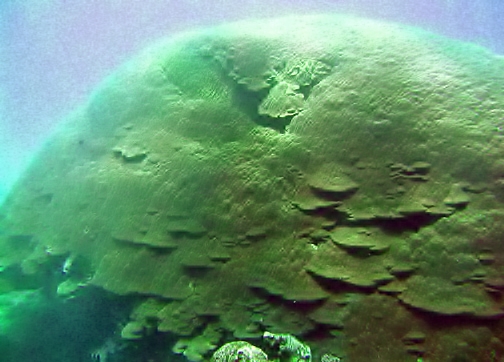
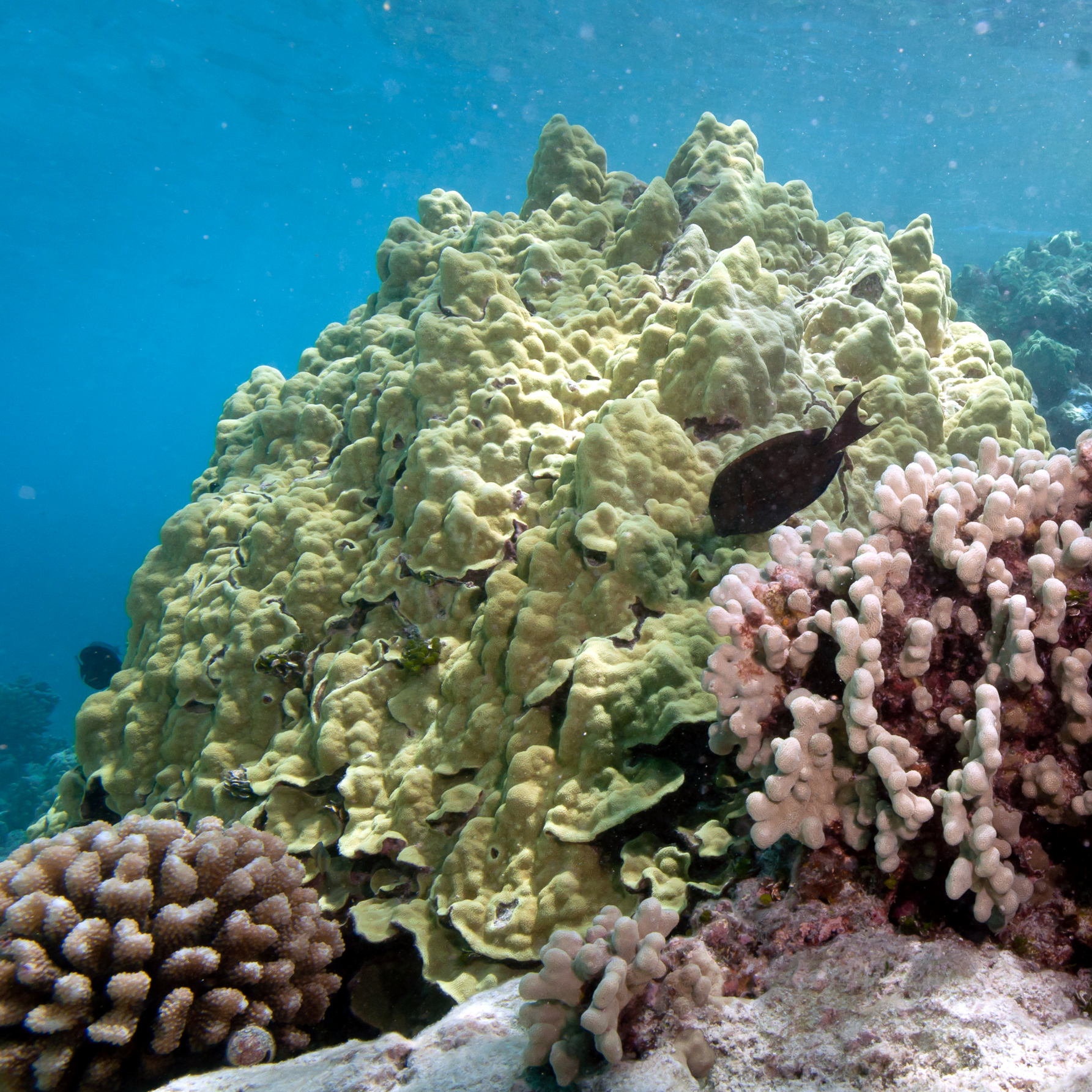
Massive porites

Porites lobata

Look for Smooth to finely textured mustard, tan, or olive domes with a bulky, rock-like profile.

Usually Reef margins, fore-reef slopes, and other hard-bottom sectors with enough stability for massive heads to persist.

Main photo: NPS photo by Larry Basch via Wikimedia Commons · Public domain
Extra photos: Lindsey Kramer via Wikimedia Commons · CC BY 2.0

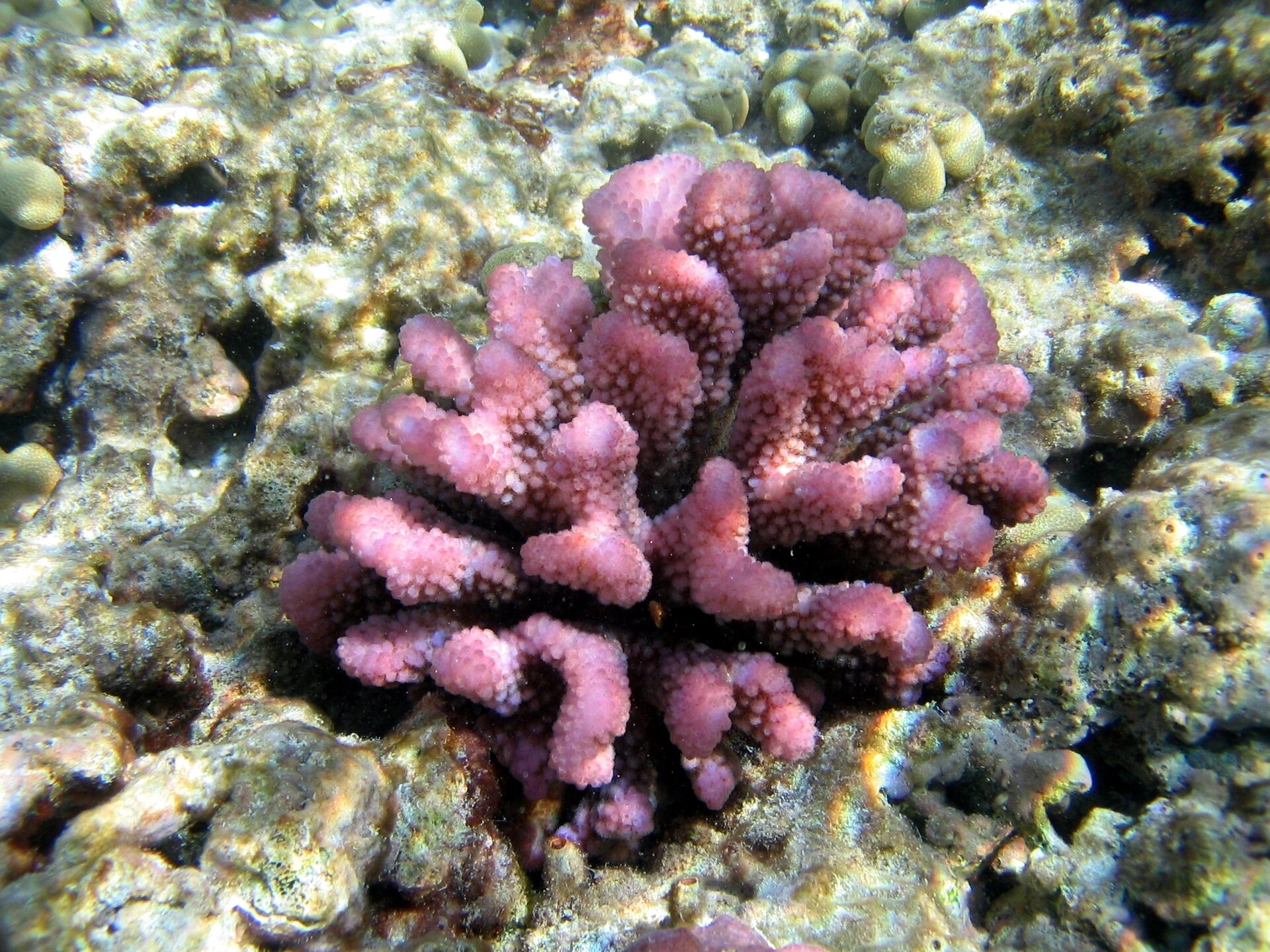
Compact branching reef-builder

Cauliflower coral

Pocillopora meandrina and related Pocillopora spp.

Look for Dense, bushy clumps with short rounded branchlets and a knobbly surface.

Usually Upper fore reef and coral-head fields, especially where the water is clear and the substrate stays hard.

Main photo: NOAA Coral Kingdom Collection via Wikimedia Commons · Public domain

Reef cement and coral-settlement surface

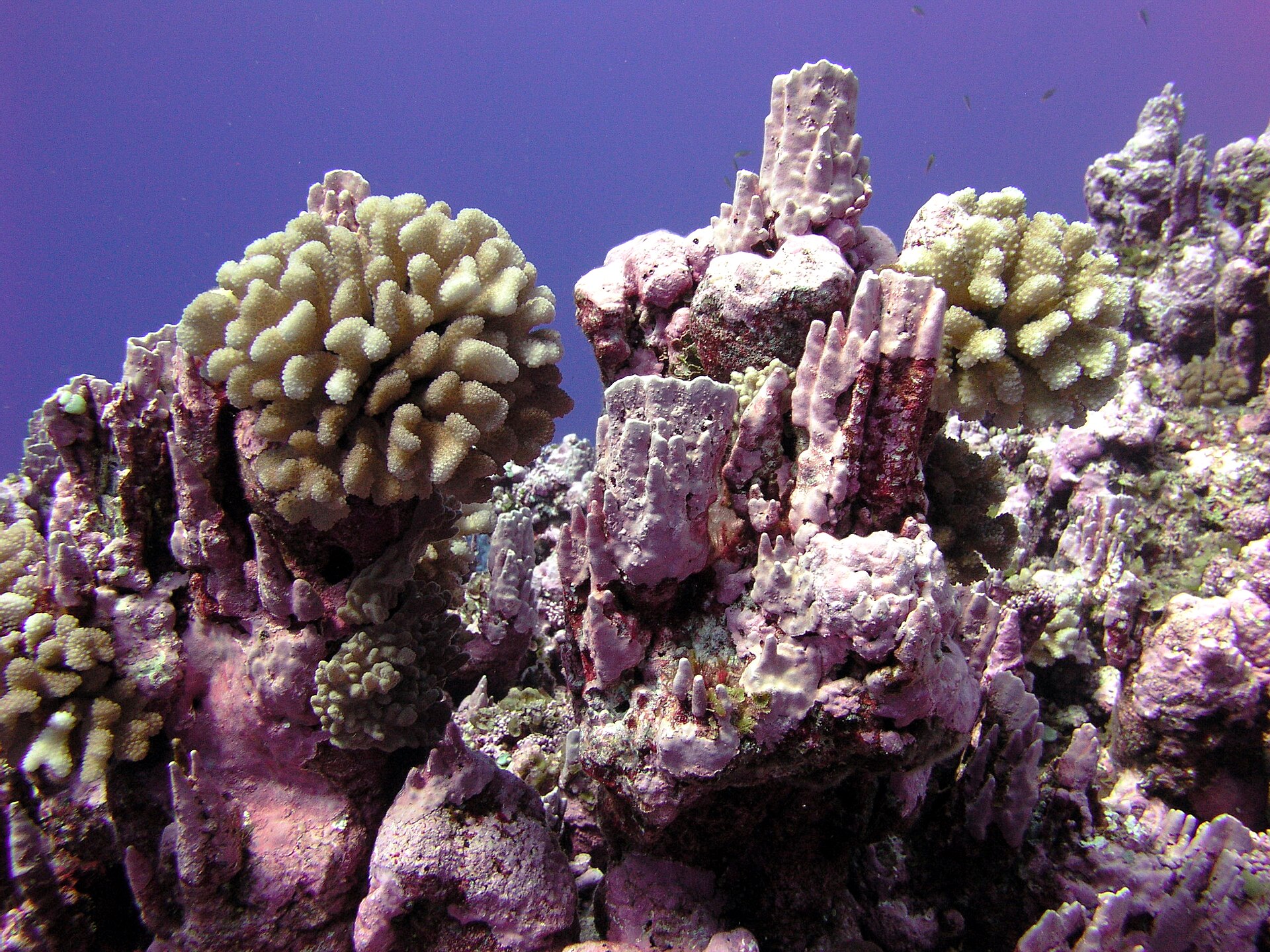
Crustose coralline algae

Corallinales, representative crusts

Look for Hard pink to mauve coatings or crusty veneers on wave-washed reef rock and dead coral skeleton.

Usually Reef crest, pavement, surge channels, and any exposed hard substrate where fleshy algae stay cropped down.

Main photo: NOAA National Marine Sanctuaries via Wikimedia Commons · Public domain

Calcified green alga and sediment maker

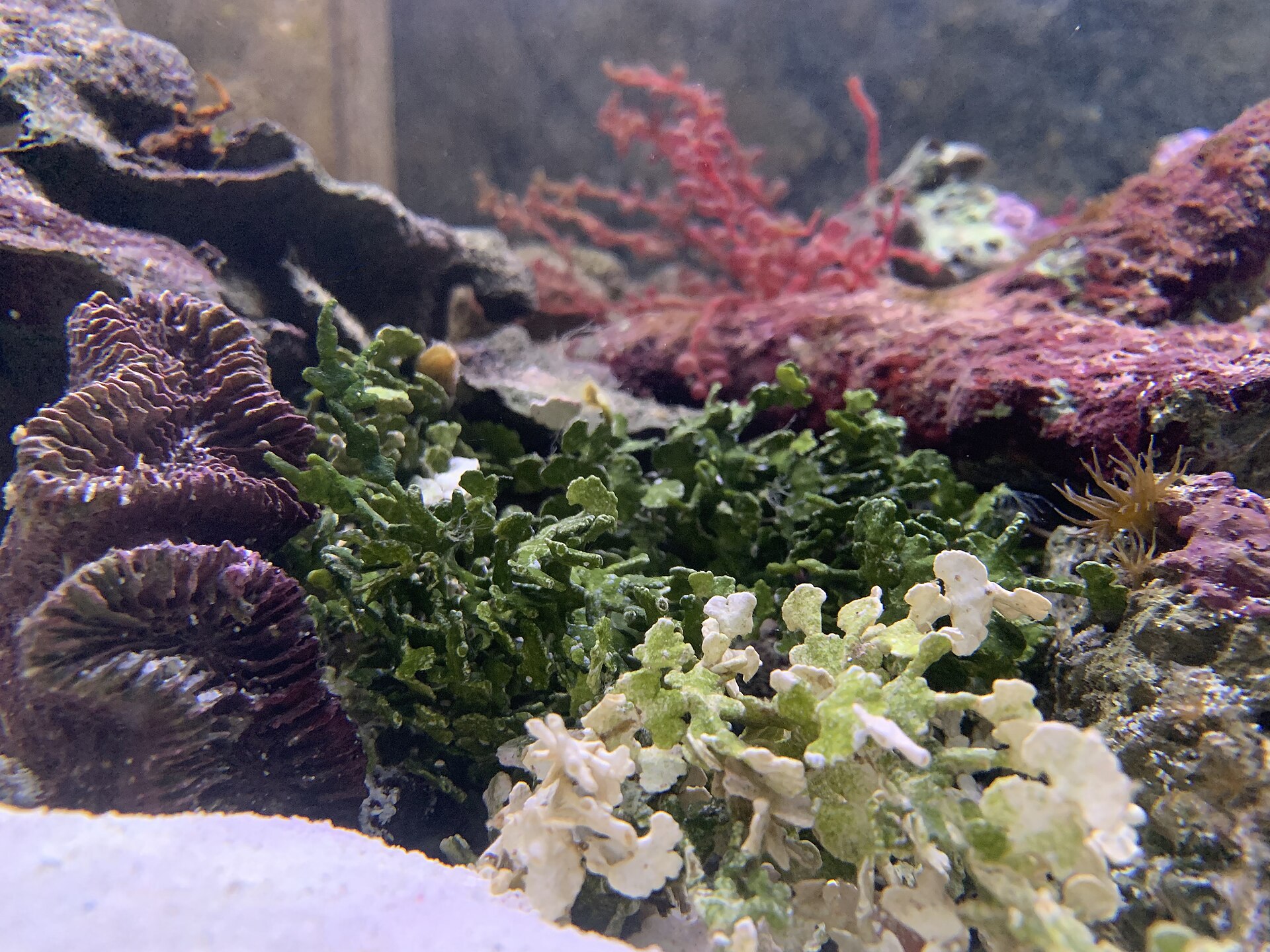
Halimeda

Halimeda spp. (photo representative: Halimeda opuntia)

Look for Crisp, segmented green pads growing in clumps between coral heads or in low hard-bottom patches.

Usually Protected to moderately exposed hard substrate, cracks, bommy bases, and reef-flat pockets.

Main photo: Coughdrop12 via Wikimedia Commons · CC BY-SA 4.0

Field ID Extras

Invertebrates

Photo cards for the larger or easier-to-spot non-fish encounters.

Detritivore and sediment processor

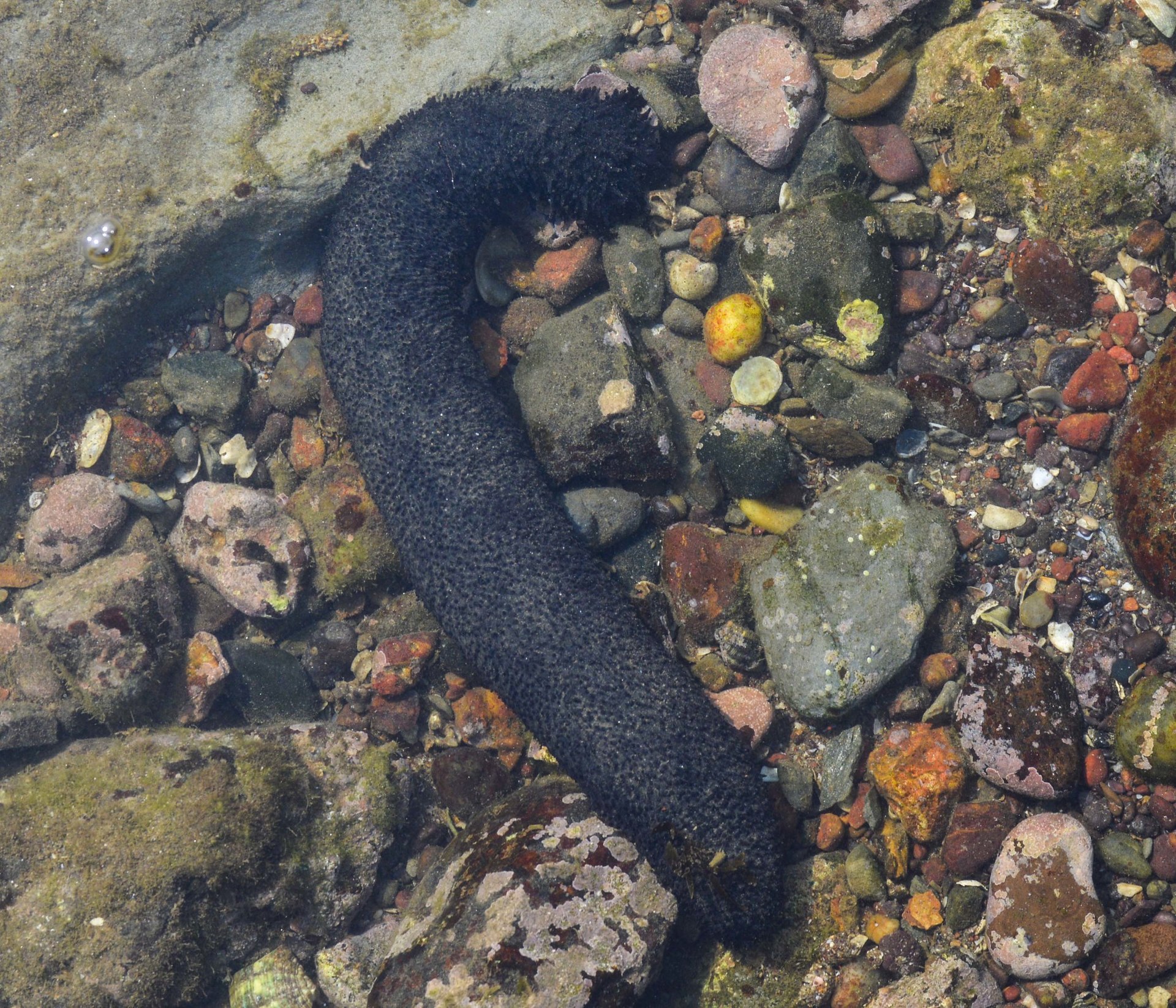
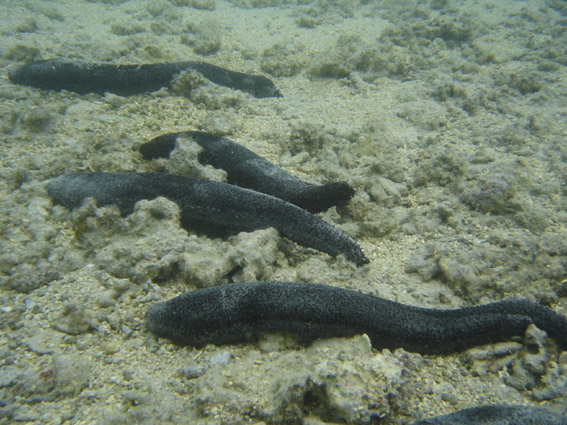
Black soft-spine sea cucumber

Holothuria leucospilota

Look for Soft charcoal-black body, usually stretched along the bottom with the head tucked into a crevice or feeding path.

Usually Reef-flat moat, shallow reef slope, and near hard edges where sand and organic material accumulate.

Main photo: Natasha Haggard via iNaturalist and Wikimedia Commons · CC BY 4.0
Extra photos: Elapied via Wikimedia Commons · CC BY-SA 2.0 FR

Nocturnal grazer and high-visibility hazard

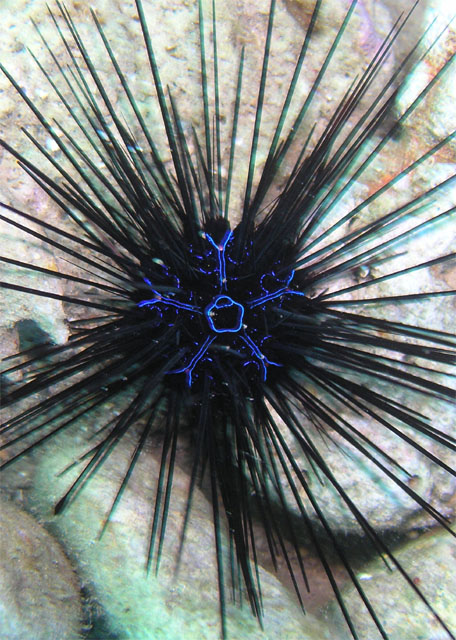
Extreme long-spined urchin

Diadema savignyi

Look for Long, radiating black spines projecting far beyond a small central test, often from cracks or from the edge of pavement.

Usually Leeward fore reef, harbor-side hardground, and creviced limestone where it can shelter between grazing bouts.

Main photo: Anders Poulsen via Wikimedia Commons · CC BY-SA 3.0
Grazer on biofilm and quiet reef icon

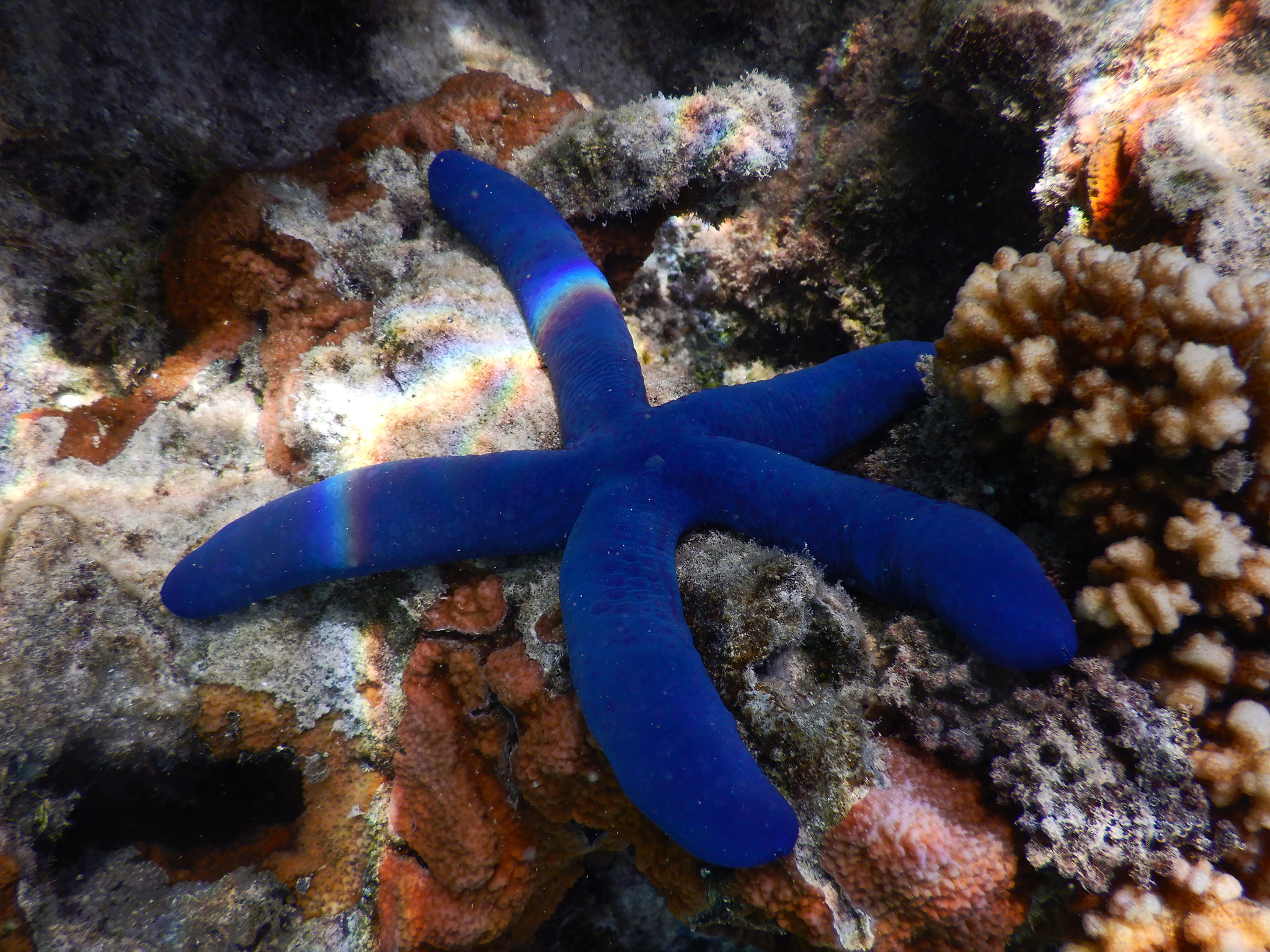
Blue sea star

Linckia laevigata

Look for Five smooth, thick, cobalt-blue arms radiating from a very small central disk.

Usually Coral heads, reef flats, and slopes where it can crawl slowly over hard substrate and biofilm-covered surfaces.

Main photo: Jon Sullivan via iNaturalist and Wikimedia Commons · CC BY 4.0

Tube worm living inside coral heads

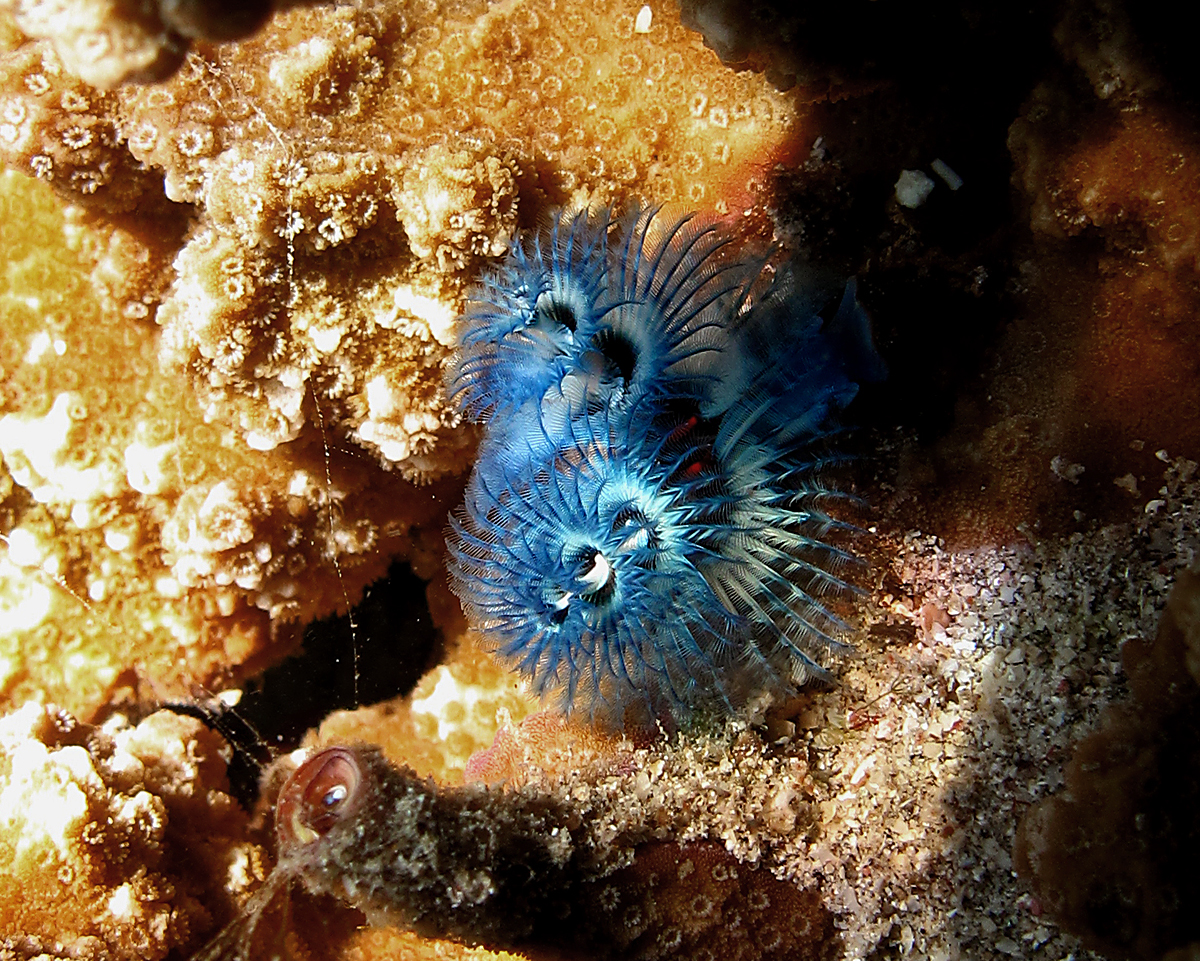
Christmas tree worm

Spirobranchus giganteus

Look for Paired, brightly colored spiral crowns protruding from a pinhole in living coral.

Usually Living coral colonies, especially massive or encrusting heads that provide permanent shelter for the calcareous tube.

Main photo: Philippe Bourjon via Wikimedia Commons · CC BY-SA 3.0
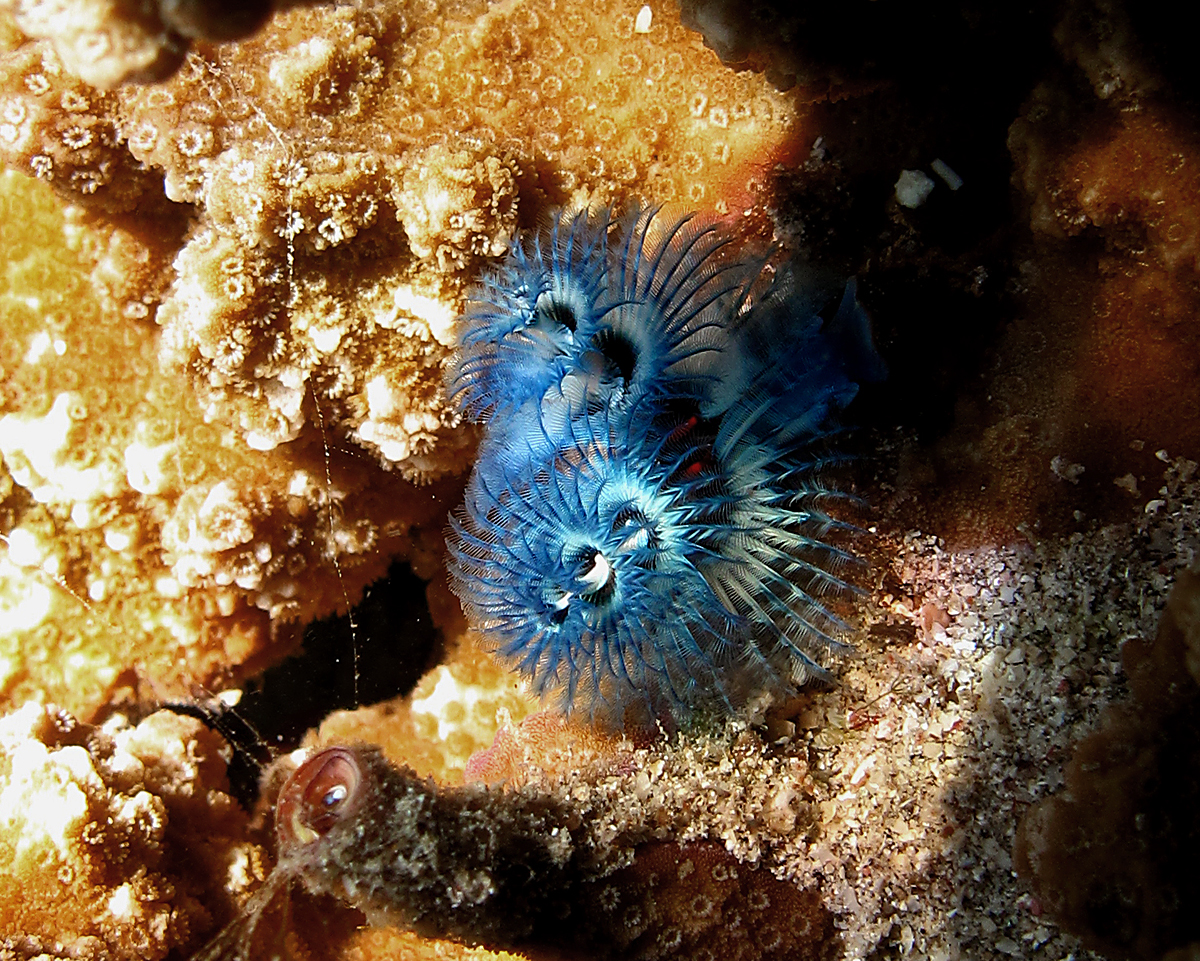
Extra photos: Philippe Bourjon via Wikimedia Commons · CC BY-SA 3.0
Sessile tube-snail and intertidal reef-edge encruster

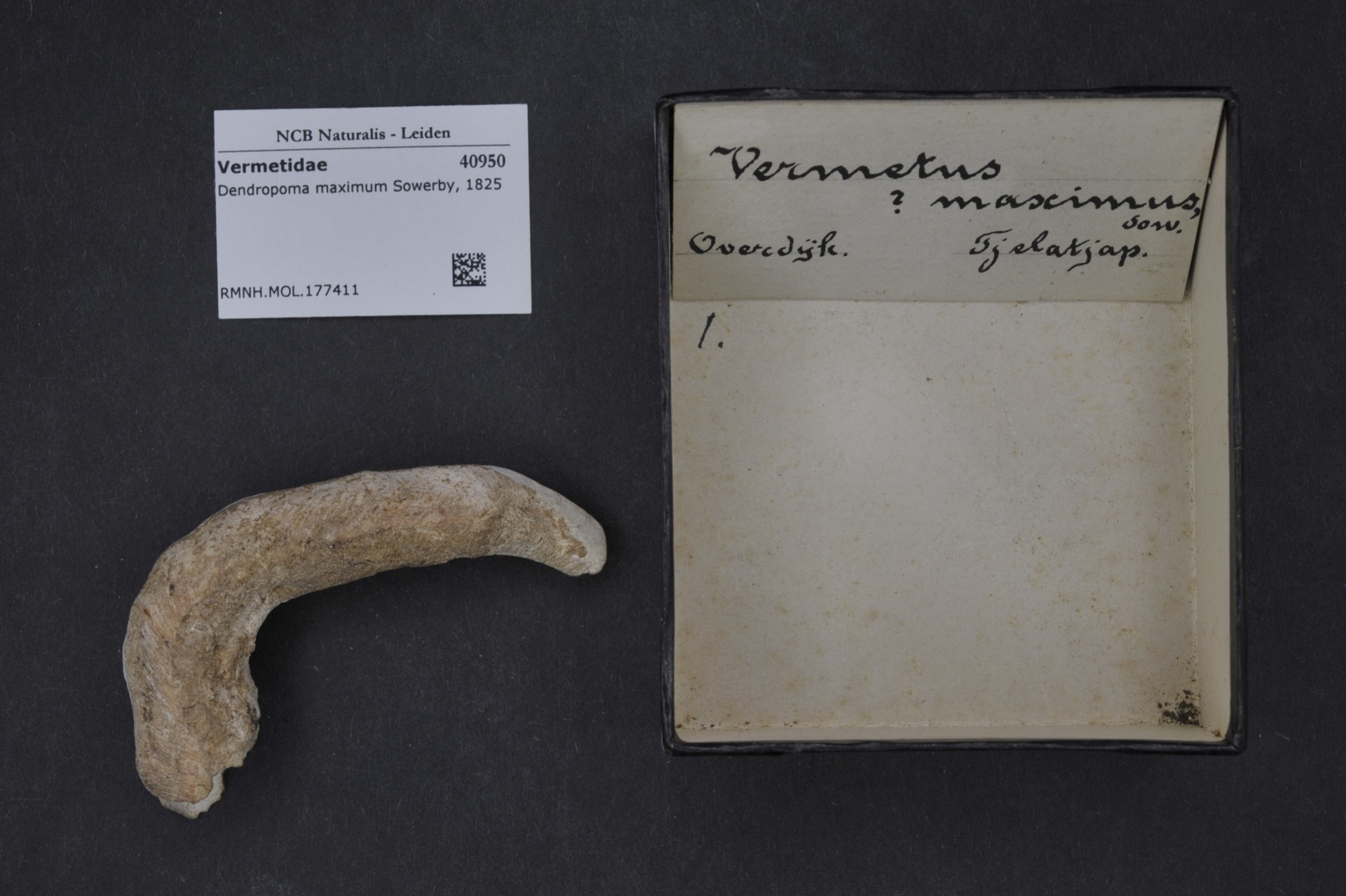
Vermetid worm-snails

Ceraesignum maximum and other Vermetidae

Look for Tangled, chalky worm-like tubes fixed to wave-washed limestone or dead coral; in calm moments a clear feeding net may flash out from the opening.

Usually Reef crest margins, splash-zone ledges, surge channels, and hard outer bench surfaces with constant wash.

Main photo: Naturalis Biodiversity Center via Wikimedia Commons · CC0

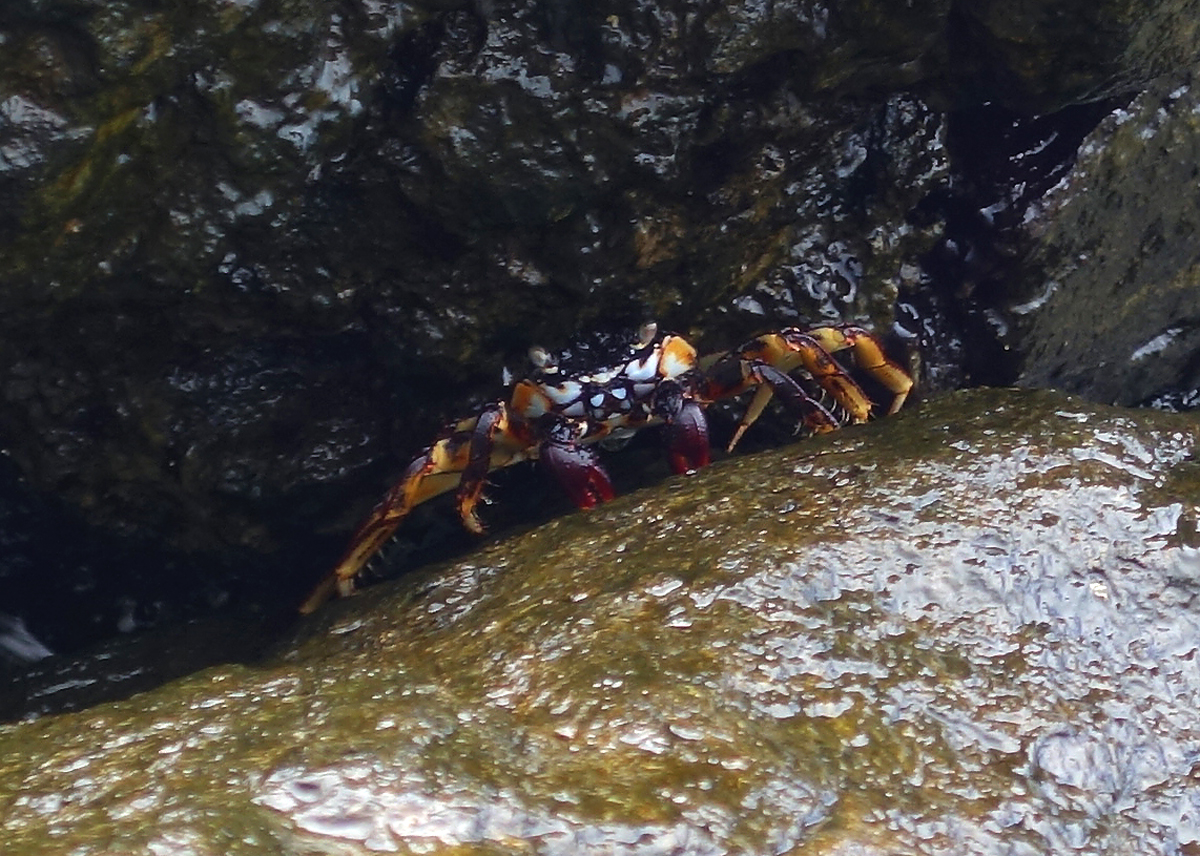
Fast intertidal scavenger and grazer

Thin-shelled rock crab

Grapsus tenuicrustatus

Look for Fast movement before fine detail; crabs dashing across black or pale limestone, then freezing in cracks just above the wash.

Usually Splash zone, outer bench, reef-edge boulders, and harbor rocks at the top of the wash.

Main photo: Elisabeth Morcel via Wikimedia Commons · CC BY-SA 4.0